Learn How to configure VPN on Linux and Get the Best Linux VPN 2014
Linux offers a unique OS platform amongst other operating systems. It is unique because it is open-source and has been collaboratively developed. Linux cross-device compatibility makes it’s the best choice for users who wish to have the same OS across all computers, from wrist watches to desktops and super computers. While Linux OS are less prone to virus attacks and malware attempts, they are not immune. Moreover, Linux OS cannot protect you from data thefts, cybercrime and other online evils. Only a Linux VPN service can protect you against malicious software, identity theft and other forms of cybercrime. Here is the list of top 5 Linux VPN providers for 2014.
| Rank | Provider | Starting Price | Visit |
|---|---|---|---|
| 1 | PureVPN | $4.16/month |  |
| 2 | ExpressVPN | $8.32/month | |
| 3 | IPVanish | $6..49/month | |
| 4 | HideMyAss | $6.55/month | |
| 5 | Iron Socket | $4.16/month | |
Why Need a Linux VPN?
It is no doubt that open source software like Linux OS has lesser malicious entities after it, as compared to its more mainstream rivals like Windows and Mac OS. However, unlike Windows and Mac, a security threat in Linux may face unprecedented delays before a solution is found. ALinux VPN allows you to ensure maximum computer and internet security as its high quality servers have updated antimalware installed that intercept malicious applications before they reach you. Whenever you go online, you are at risk of having your data stolen. This risk is magnified many folds when you connect using a public WiFi hotspot, such as the ones at coffee shops, airports, etc. A good VPN will feature built-in data encryption tools and data tunneling protocols to safeguard your internet activities from cybercriminals and government spying agencies alike. In addition, a VPN service will help you unblock geographically-restricted websites and applications that are otherwise inaccessible, such as Netflix, Hulu, Pandora, Spotify, BBC iPlayer, HBO and more. A Linux VPN accomplishes this by switching your IP with an IP from its own servers in countries where these websites are accessible such as the US and the UK. Owing to these reasons, a VPN has become an inevitable necessity of the modern times with an ever-increasing number of people opting for VPN services, everyday.
Choice of Operating System
It is recommended that you should for that VPN provider that offers customized software for your OS, be it Windows, Mac OS, Linux, or any other. This vital check would assure you safe, secure and anonymous internet access, without the obligation to face any form of internet censorship from the respective authorities. Most VPN users have Windows as their OS; and it comes as no surprise as Windows OS (including Windows 8, Windows 7, Windows Vista and Windows XP) controls more than 80% of the OS market with Linux at 4.8%. However, it does not deter us from providing you with a step-by-step setup on how to configure VPN on Linux OS.
[ Read: Best VPN for Linux - Ubuntu ]

Configuring VPN on Linux (Ubuntu)
Let us know in detail how to set up a VPN on Linux OS (Ubuntu), so that you may not face problem in exploring your preferred websites through Linux. Step# 1:
- Navigate to ‘Network Connections’ on your Linux OS.
- For this you can either click to go to VPN Connections.
- Configure VPN or you can go to System -> Preferences
- Then, Network Connections.
 Step# 2:
- Once you’re on the “VPN” tab in the “Network connections”
- Click configurations window
- Then, click “Add”.
Step# 3:
- Click “Network Connections” to go to its window as shown below:
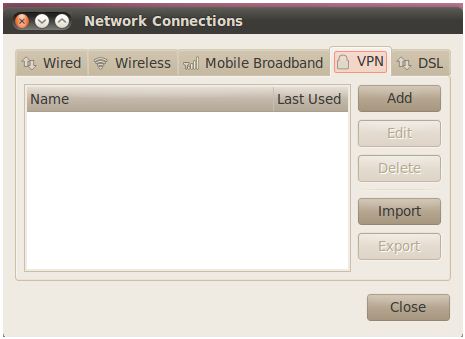 Step# 4:
- Select VPN and click Add to obtain a dialog box that asks you a VPN connection type.
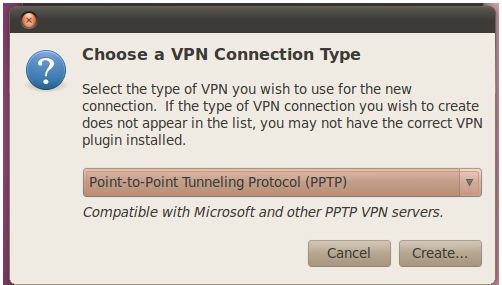 Step# 5:
- Click Create to establish the default PPTP VPN connection on your Linux OS.
Step# 6: Your VPN service provider will give you all the important details such as
- Gateway, which is the DNS Name of your server or its IP address, user
- User Name; and
- Password
Mention the desired information in the below window and click Advanced. Step# 7:
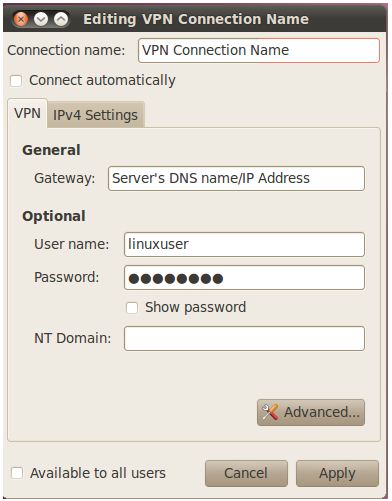 Step# 7:
- On the “Advanced Options” window check the first checkbox for the MPPE option.
- Then, the second checkbox to allow stateful encryption and click “OK”.
Step 8:
- Check MPPE Option and then check “Allow Stateful Encryption”.
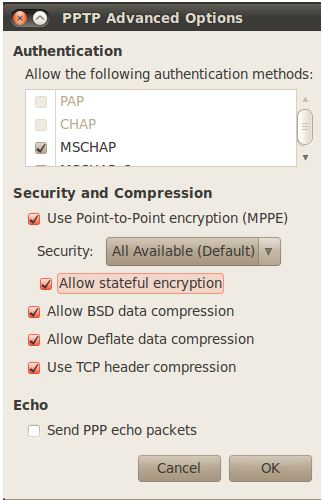
Step# 9:
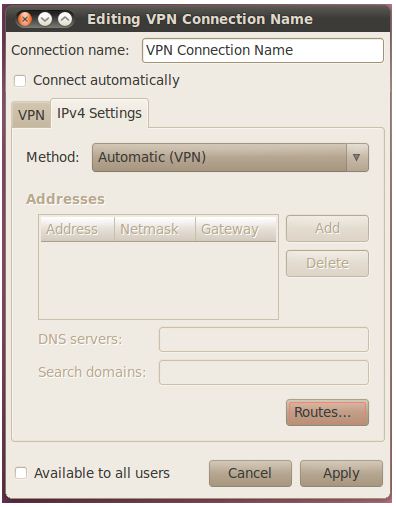
- Come back to main window and click ‘IPV4 Settings’. Then click ‘Routes’.
 Step# 10:
- Check the bottom most option, ‘Use this connection only for resources on its network’, click OK.
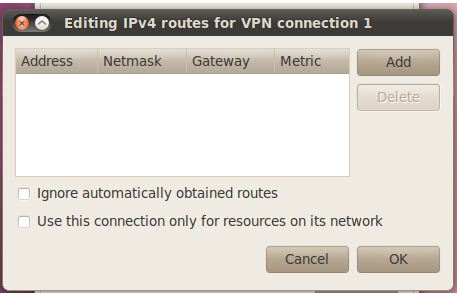
This is how you can set up PPTP VPN Protocol on your Linux OS for PPTP. Though you can change the protocol as per your own choice or as facilitated in your computer.
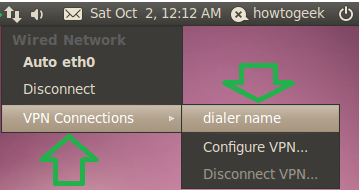
- After configuring the connection.
- You can go to VPN Connections->
- Dialer Name to start using the VPN.
Conclusion
A VPN is absolutely empirical in today’s times of cybercrime, data theft and government surveillance. A VPN protects your internet activities, secures your important data like credit card numbers, usernames, passwords and banking information, gives you complete access to region-restricted content like Netflix and BBC iPlayer, and makes you anonymous and completely untraceable. It does not matter what OS you use, risk of online data theft applies equally to everyone. So, secure yourself with a VPN. Get one, today!
[ Read: Best VPN for Linux - Fedora ]

Very nice article!
ReplyDelete